The most popular coated floor in the East Valley
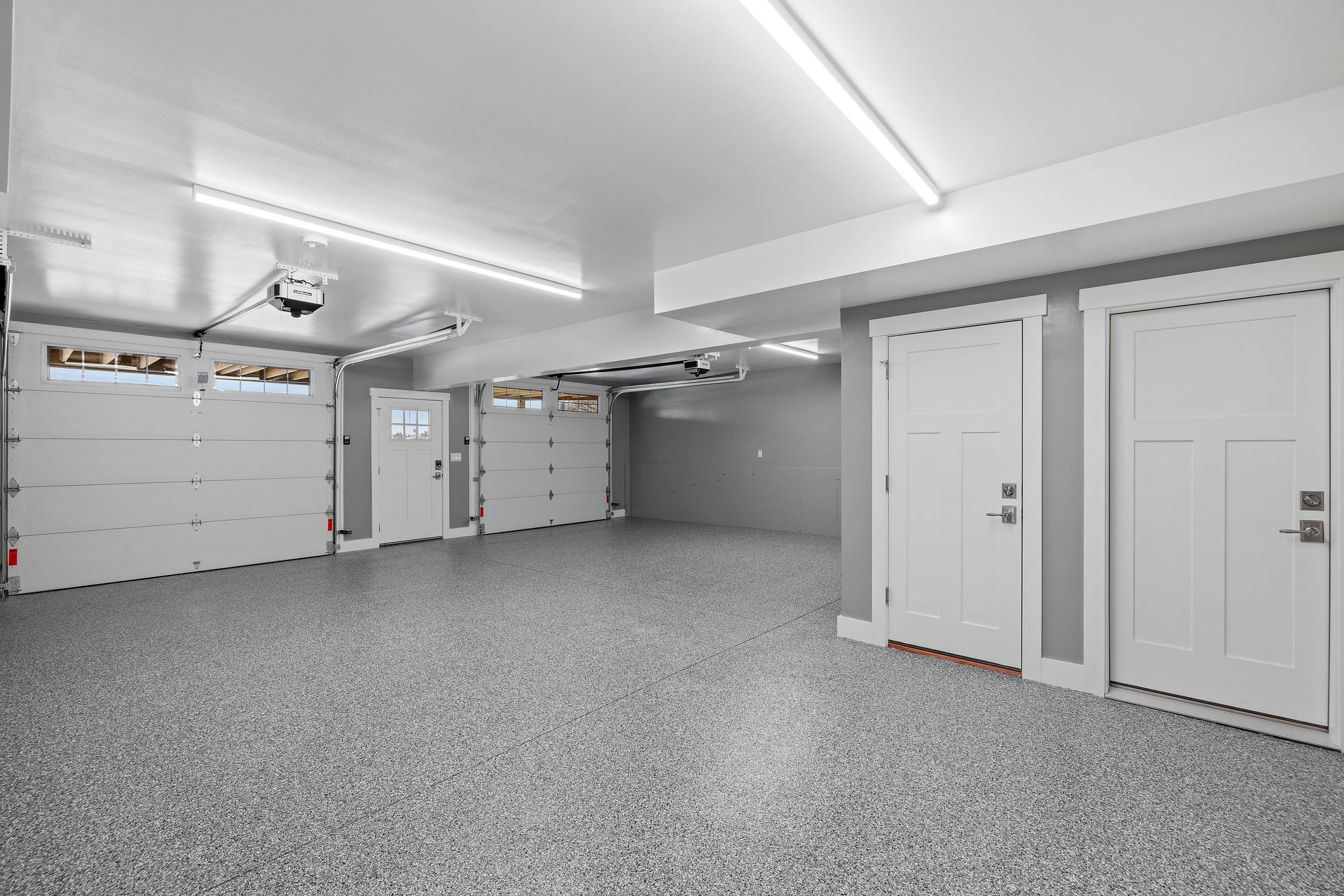
If you have seen a finished garage in Mesa recently, there is a good chance it was a decorative flake floor. Also called chip flooring or broadcast flooring, it combines a high-performance basecoat, thousands of colored vinyl flakes and a clear protective topcoat into one tough, textured surface. It looks a little like granite or terrazzo from a distance and reveals depth and color variation up close.
Flake floors are popular for good reason. They are forgiving, practical and attractive. The multicolored pattern camouflages dust, light stains and tire marks far better than a solid color. The natural texture improves traction. And the extra material broadcast into the system adds thickness and impact resistance. Mesa Epoxy Flooring Pros installs flake floors in garages, workshops, patios, laundry rooms, commercial restrooms, break rooms, gyms and retail spaces across the East Valley.
How a flake floor is built
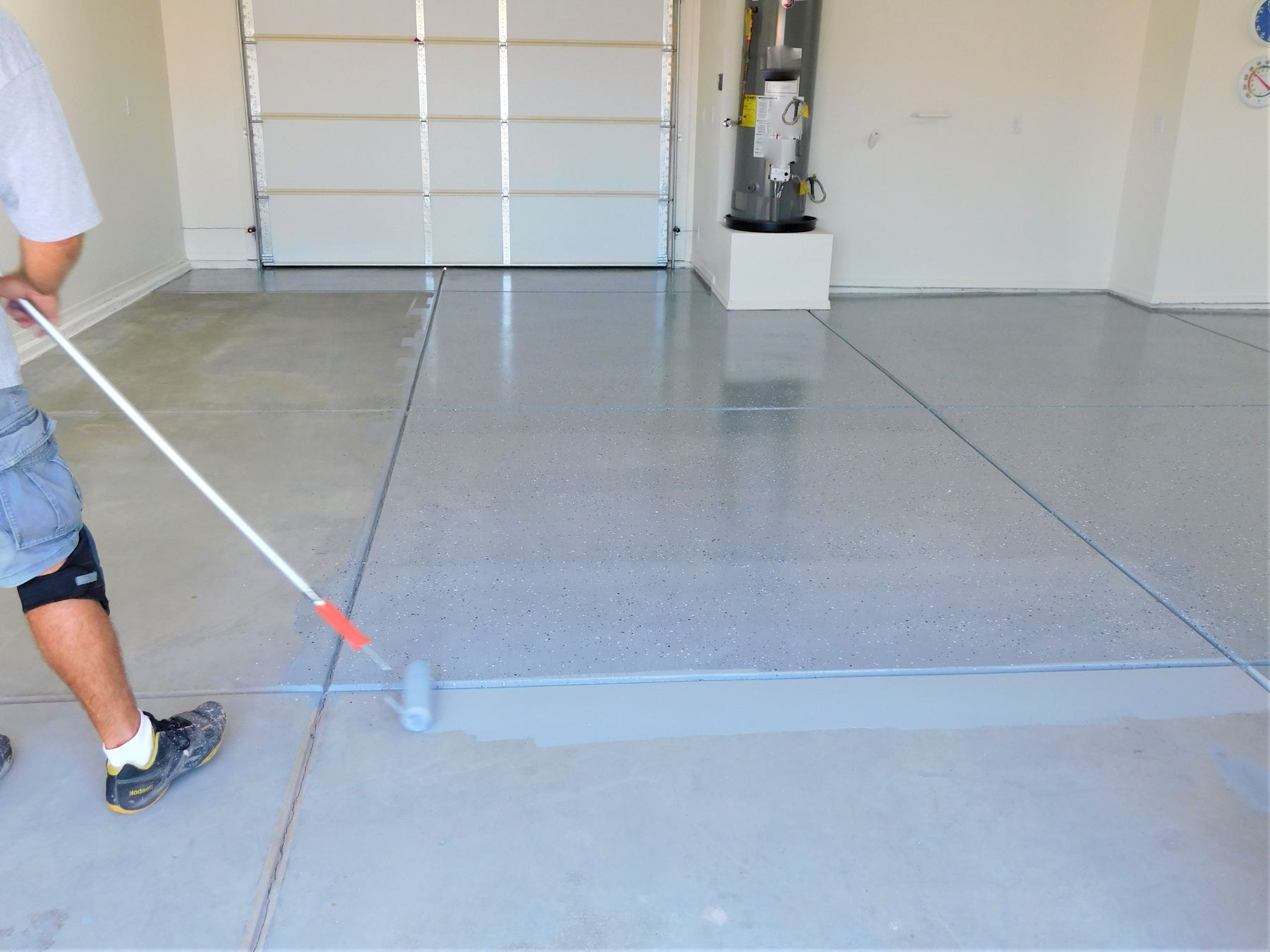
A flake floor is only as good as the system under the chips. Here is the sequence we follow on every installation:
- Grind and profile the slab with diamond tooling and full dust extraction to remove sealers, laitance and contaminants.
- Repair cracks, spalls and joints with flexible repair materials, then grind them flush.
- Apply a pigmented basecoat in a color that complements your flake blend. If any tiny gaps remain between chips, the base color fills the background.
- Broadcast flake to refusal, meaning we keep throwing chips until the wet basecoat cannot accept any more. This full broadcast is what creates a uniform, dense look and maximum durability.
- Scrape and vacuum the cured surface to knock down high points and remove loose flake.
- Seal with a clear topcoat, usually a UV-stable polyaspartic, which locks the chips in place and determines the final sheen and texture.
Some installers use a partial or "light" broadcast to save material. That approach leaves large areas of bare basecoat between chips, which shows wear sooner and reduces texture. Unless you specifically want a light, speckled look for design reasons, we recommend full broadcast every time.
Choosing your flake blend
Color selection is the fun part. Flake blends combine three to six colors in different proportions, and the right choice depends on your space, lighting and taste. A few guidelines we share with clients:
- Mid-tone grays and tans are the most practical. They hide dust, dirt, tire marks and light oil equally well.
- Light blends make garages feel brighter and larger, but they show dark spills more readily.
- Dark blends look bold and hide oil, but show the fine Arizona dust that blows in under garage doors.
- Warm blends with cream, tan, copper and brown complement stucco, stone and desert landscaping.
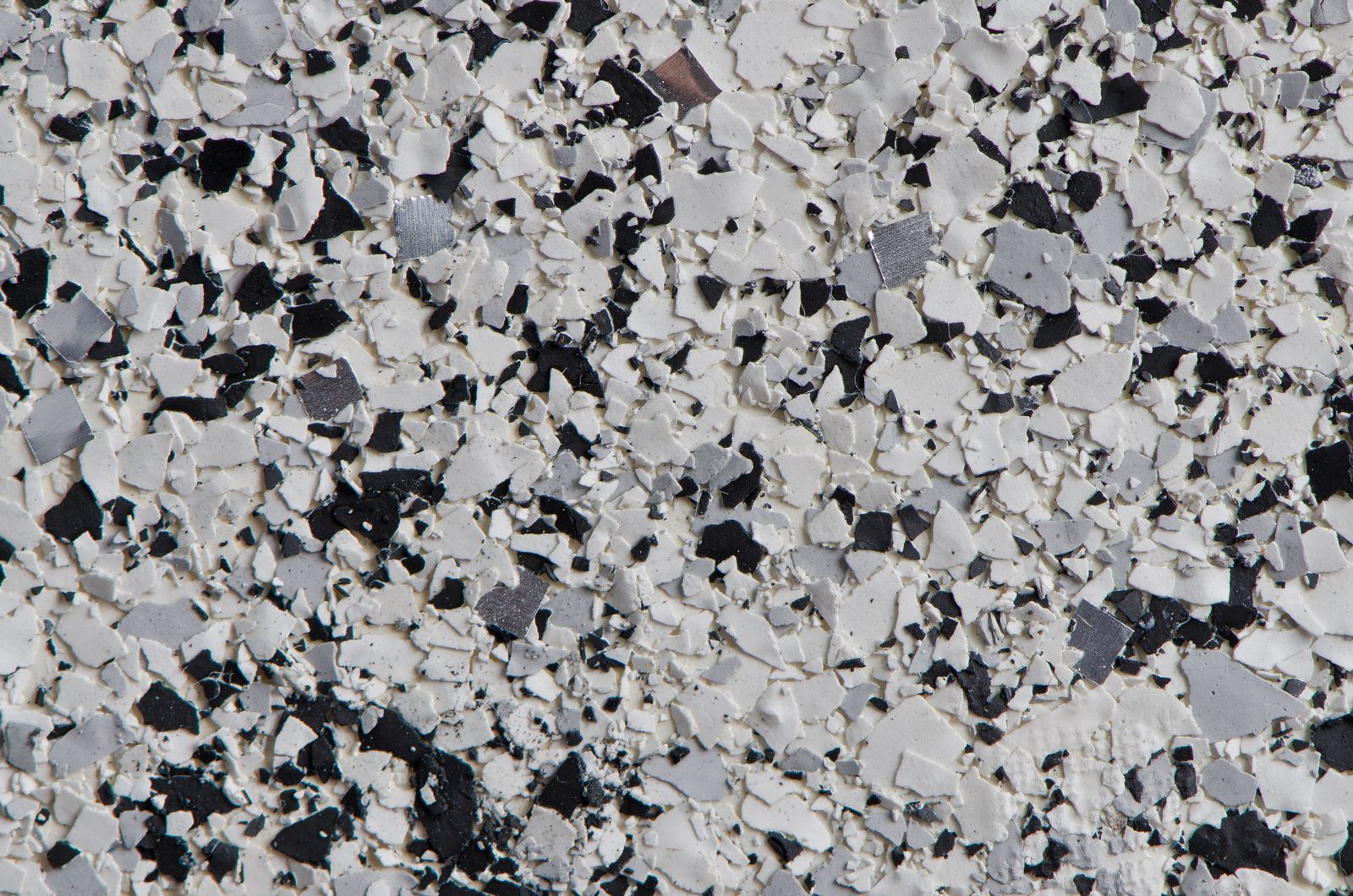
- High-contrast blends such as black and white make a strong design statement in gyms, shops and showrooms.
Flake size matters too. Standard quarter-inch flakes are the classic garage look. Smaller flakes create a finer, more refined texture that works well indoors. Larger flakes produce a bold, high-energy pattern. At your estimate we bring physical sample boards in multiple sizes so you can compare them in your own space and light.
Texture, traction and comfort
A full-broadcast flake floor has a natural, slightly orange-peel texture even after the topcoat. That texture provides meaningful grip, which is why flake systems are a popular choice for garages that see water from washing cars or monsoon runoff. If you want even more slip resistance — for example, on a sloped garage apron, a pool-side patio or a commercial restroom — we can blend a fine anti-slip aggregate into the topcoat. If you prefer a smoother feel that is easier to mop, we can apply an additional clear coat to soften the texture.
Flake floors and the Arizona climate
Flake systems perform exceptionally well in Mesa when they are built with the right materials. The vinyl chips themselves are color-stable, and the polyaspartic topcoat we use resists UV yellowing, so floors exposed to direct sun through an open garage door keep their true color. The thickness of a fully broadcast system also helps the floor resist hot-tire pickup and the impact of dropped tools.
For outdoor flake applications, such as covered patios or entryways, we adjust the system to account for higher temperature swings and choose lighter blends that stay cooler underfoot.
Matching your home: bring a cabinet door sample, a paint chip or even a photo of your stone countertops to the estimate. We will help you find a flake blend that ties the space together.
Flake versus other finishes
Clients often ask how flake compares with other options. Compared with a solid-color epoxy, flake hides imperfections and dirt much better and offers more grip, while solid color offers a sleeker, more minimal look. Compared with metallic epoxy, flake is more practical for high-traffic and vehicle areas, while metallic is a showpiece that shines in interiors and showrooms. Compared with quartz broadcast, flake has a softer texture and more color variety, while quartz offers maximum slip resistance for wet commercial areas.
Commercial flake flooring
Flake floors are not just for homes. Their durability, texture and stain-hiding ability make them a smart choice for retail stores, offices, break rooms, locker rooms, restrooms, veterinary clinics, gyms and dealership service areas. We can incorporate your brand colors into a custom blend, add an integral cove base for sanitary wash-down areas, and schedule installation after hours to keep your business open.
What affects the cost of a flake floor
Flake floors are priced by the project rather than a flat rate, because the work required varies so much from slab to slab. The total area is the starting point, but preparation often drives the difference between two similar-sized garages. A clean, relatively new slab with a light builder sealer needs far less work than a thirty-year-old slab with oil saturation, wide settlement cracks, spalled edges and a peeling DIY coating that must be removed first. Flake size and blend, the number of topcoats, optional anti-slip additives, cove base, steps and any stem walls also factor in.
When you compare estimates, look closely at how each contractor describes the flake broadcast. A "full broadcast" or "broadcast to refusal" uses considerably more material than a partial broadcast and produces a thicker, more durable, more uniform floor. Also ask what the topcoat is. A UV-stable polyaspartic topcoat costs more than a standard epoxy clear coat, but in Arizona it is the difference between a floor that stays true to color and one that yellows.
Refreshing an older flake floor
If you already have a flake floor that has dulled over the years but is still well bonded, you may not need a full replacement. In many cases we can clean, lightly abrade and recoat the surface with a fresh clear topcoat to restore gloss and protection. If the existing coating is peeling, bubbling or lifting at the garage door, it must be removed by grinding and replaced. We will inspect it and tell you honestly which option makes sense.
Caring for a flake floor
Flake floors are low maintenance. Sweep or dust-mop regularly, and use a damp mop or auto-scrubber with a neutral cleaner for deeper cleaning. Avoid harsh acids and abrasive pads. Because the topcoat seals the chips completely, spills sit on the surface and wipe away without staining when cleaned in a reasonable time.
Get samples at your free estimate
The best way to choose a flake blend is to see it in person. During your free on-site estimate in Mesa, Gilbert, Chandler, Queen Creek or anywhere in the East Valley, we will measure, inspect and test your slab, show you a wide range of flake samples and provide a detailed written proposal. There is no obligation, and you will come away knowing exactly what your floor will look like and what it will take to install it correctly.