What is a polyaspartic floor coating?
Polyaspartic is a high-performance coating chemistry from the polyurea family. It was originally developed to protect steel bridges and industrial structures, where it needed to cure quickly and resist sunlight, weather and corrosion. Those same properties make it an outstanding floor coating, especially in a climate like Mesa's.
Compared with traditional epoxy, polyaspartic coatings cure dramatically faster, stay color-stable in direct sunlight, tolerate a wider range of temperatures during installation and remain somewhat more flexible once cured. That combination is why polyaspartic has become the topcoat of choice for professional garage systems across the country — and why many of the floors we install in the East Valley use polyaspartic in some or all of their layers.
The biggest advantages of polyaspartic
Fast cure and quick return to service
Traditional epoxy systems often take several days to install because each layer needs a long cure before the next can be applied, and vehicles may need to stay off the floor for up to a week. Polyaspartic cures in a fraction of that time. On many residential garages we can grind, repair, base coat, broadcast flake and topcoat in a single day. You can typically walk on the floor within a few hours and park on it about a day later. For businesses, that speed means less downtime and lost revenue.
UV stability — no yellowing
Aromatic epoxies amber over time when exposed to ultraviolet light. In an Arizona garage with the door open in the afternoon, or on a covered patio, that yellowing can appear quickly. Polyaspartic coatings are aliphatic, which means they resist UV degradation and keep their clarity and color. Your gray flake floor stays gray instead of turning a muddy tan.
Hot-tire and heat resistance
Hot-tire pickup is one of the most common garage floor failures in the Valley. When tires heat up on summer roads and then sit on a coating, the softened rubber can bond to the surface and pull it away as the car leaves. Polyaspartic systems are formulated to resist this, especially when applied over a properly ground and well-bonded base.
Chemical and abrasion resistance
Polyaspartic topcoats resist gasoline, oil, brake fluid, antifreeze, road salts, pool chemicals and most household cleaners. They are also very abrasion resistant, which keeps them looking good under foot traffic, rolling toolboxes and dropped tools.
Wide application temperature range
Epoxy is sensitive to temperature during installation. Polyaspartic can be applied in a wider range of conditions, which helps us maintain schedules through hot Mesa summers and the occasional cold winter morning. In extreme heat we adjust formulations and work early in the day to manage its fast working time.
Polyaspartic versus epoxy
Epoxy is not a bad product. It has excellent adhesion, high build and a forgiving working time, which is why we still use it as a basecoat or primer in many systems, especially indoors and on commercial projects. Its weaknesses are UV yellowing, slower cure and lower flexibility. Polyaspartic covers those weaknesses. In practice, the best systems often combine the two: an epoxy or polyurea base for penetration and adhesion, with a polyaspartic topcoat for UV protection, heat resistance and fast return to service.
For outdoor and sun-exposed areas, we generally recommend full polyaspartic or polyurea and polyaspartic systems. For interior metallic floors, epoxy is used for the decorative layers with a UV-stable topcoat on top.
Where polyaspartic coatings make sense
- Residential garages where you want a one-day installation and a floor that will not yellow.
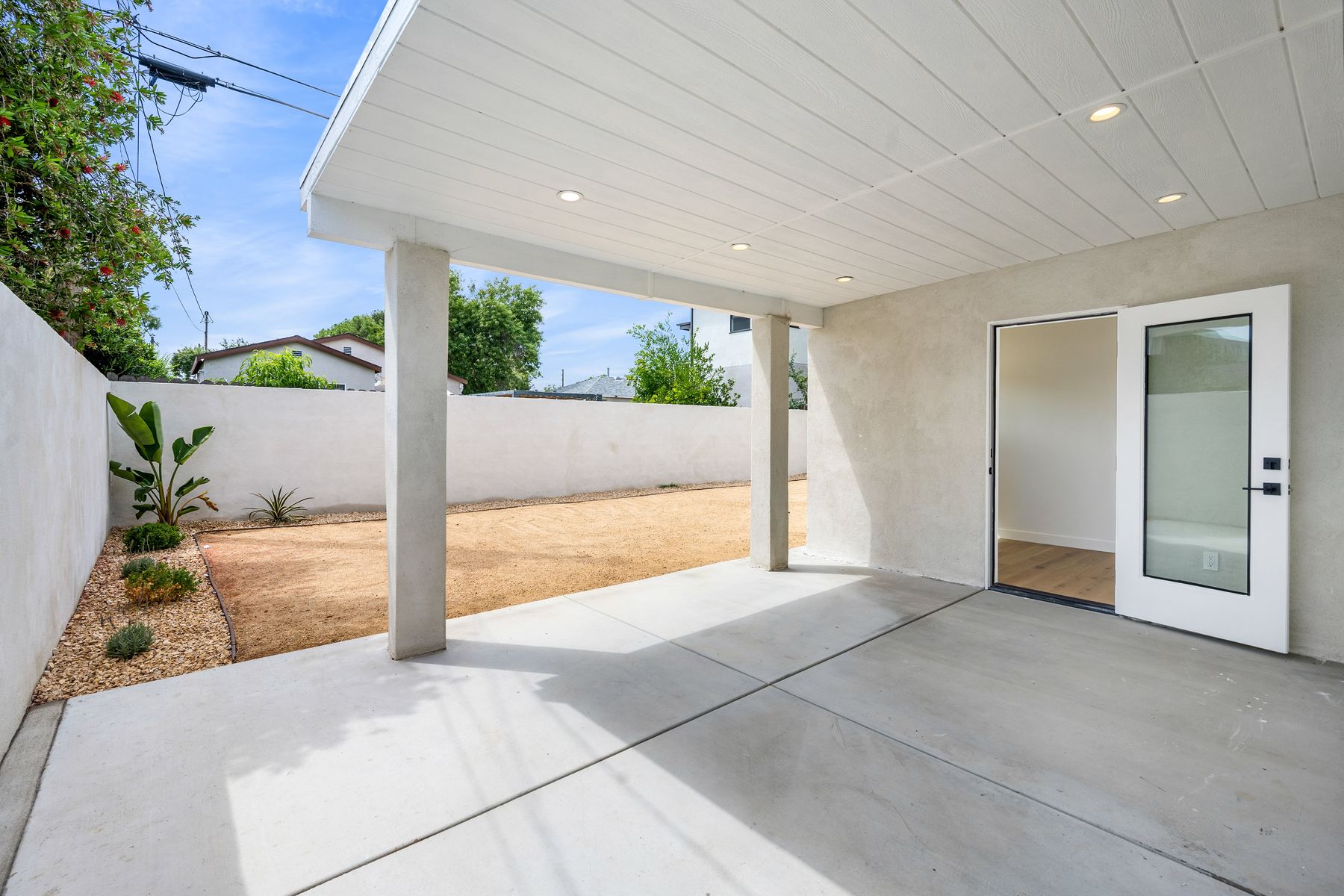
- Covered patios and entryways exposed to sun and temperature swings.
- Pool decks and outdoor kitchens when paired with slip-resistant texture.
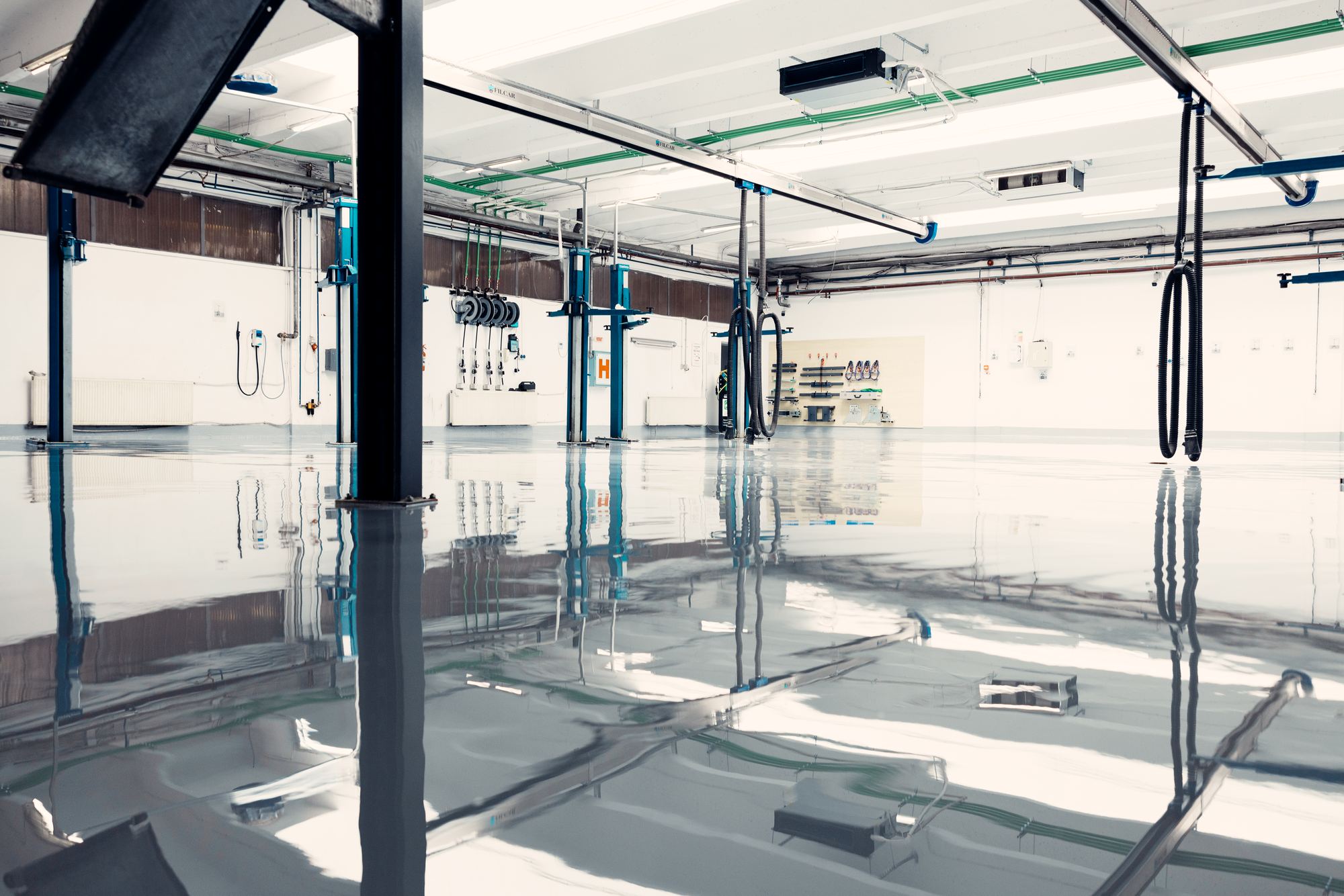
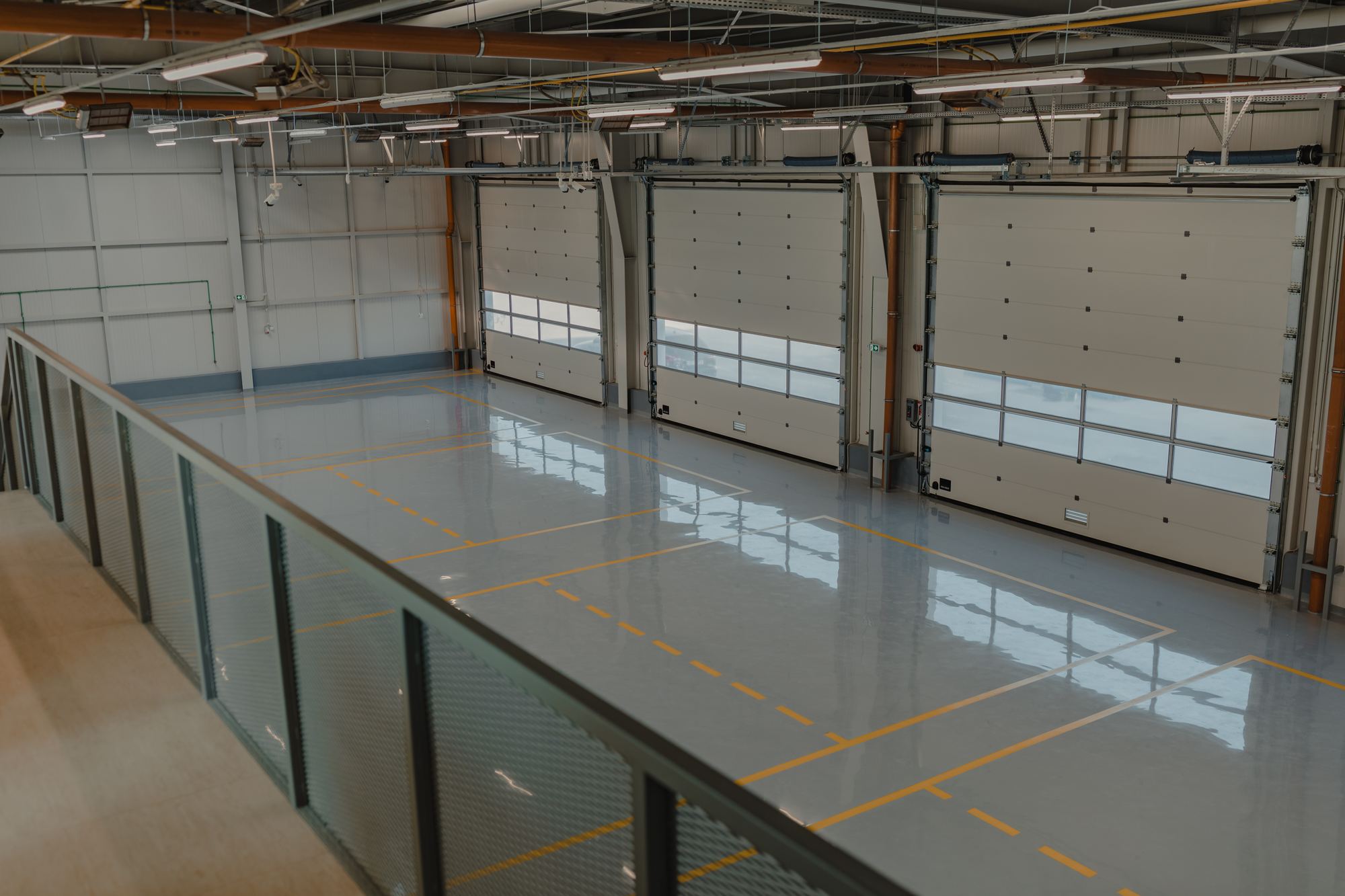
- Auto shops, dealerships and service bays that cannot afford long closures.
- Retail, restaurants and commercial kitchens needing overnight or weekend installs.
- Aircraft hangars and fleet facilities with high chemical exposure.
Why experience matters with polyaspartic
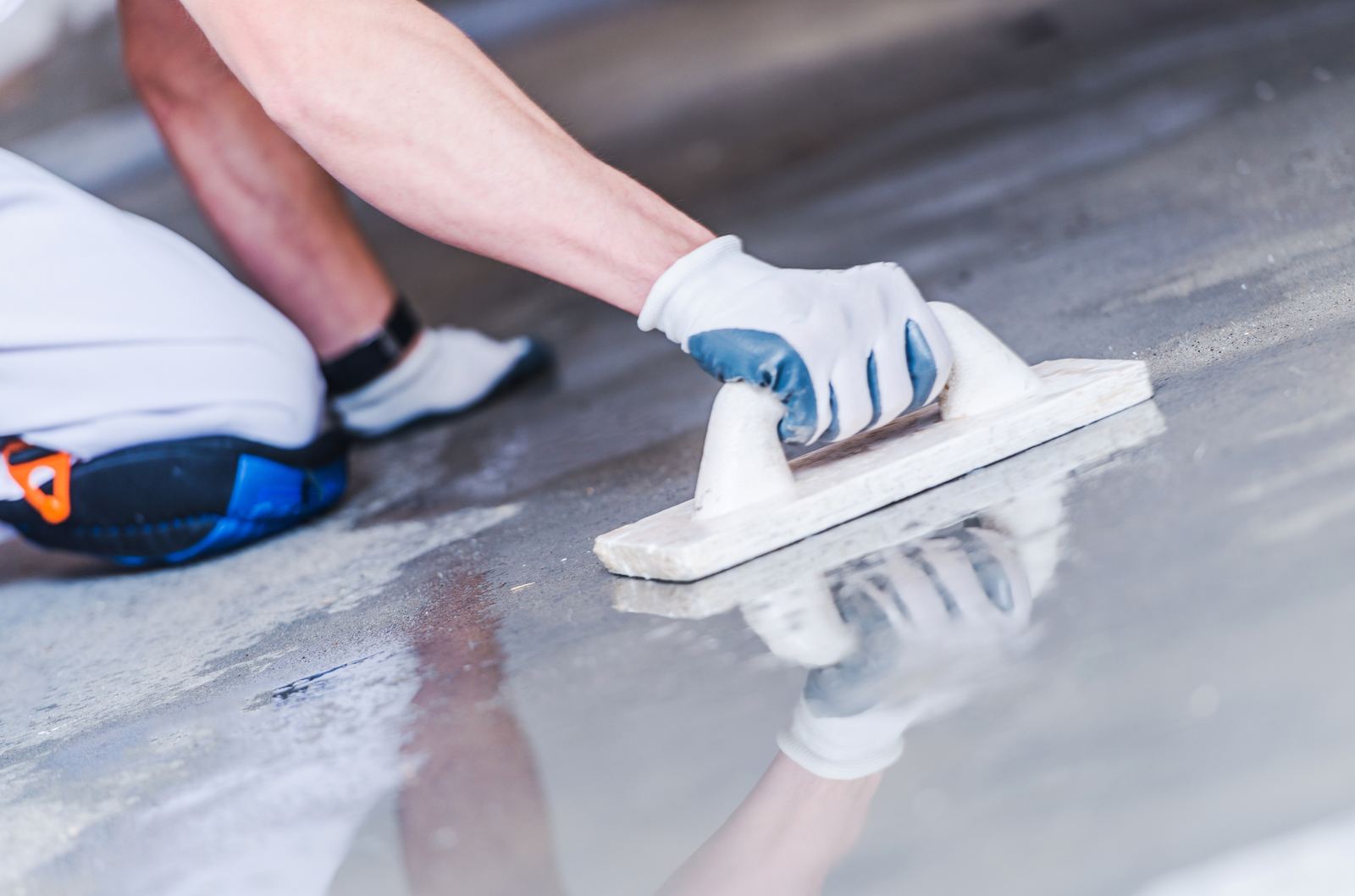
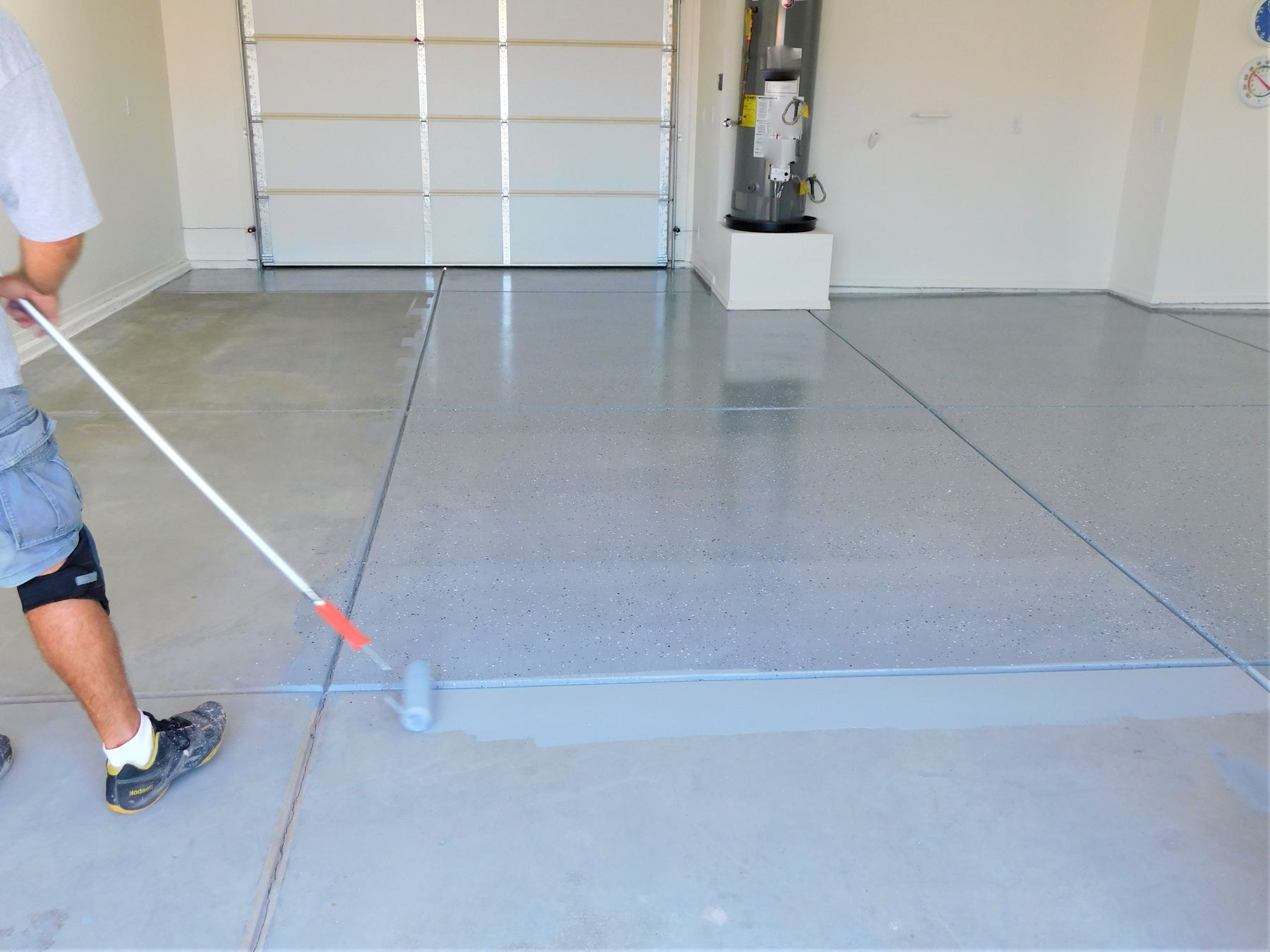
The fast cure that makes polyaspartic so convenient also makes it demanding to install. Once mixed, it has a short pot life — sometimes just a few minutes in summer heat — and it must be spread, back-rolled and broadcast quickly and evenly. Inexperienced applicators can end up with roller marks, inconsistent sheen, trapped bubbles or areas that cure before they are properly leveled. Our crews install polyaspartic systems regularly, mix in small batches matched to conditions and plan the floor so every section is applied with a wet edge.
Beware of "one-day" shortcuts. A one-day install should still include full diamond grinding and crack repair. Speed should come from the coating chemistry, not from skipping preparation.
Our one-day polyaspartic garage process
- Morning prep: we mask the garage, grind the entire slab with dust extraction and vacuum thoroughly.
- Repairs: cracks and spalls are filled with fast-setting repair material and ground flush.
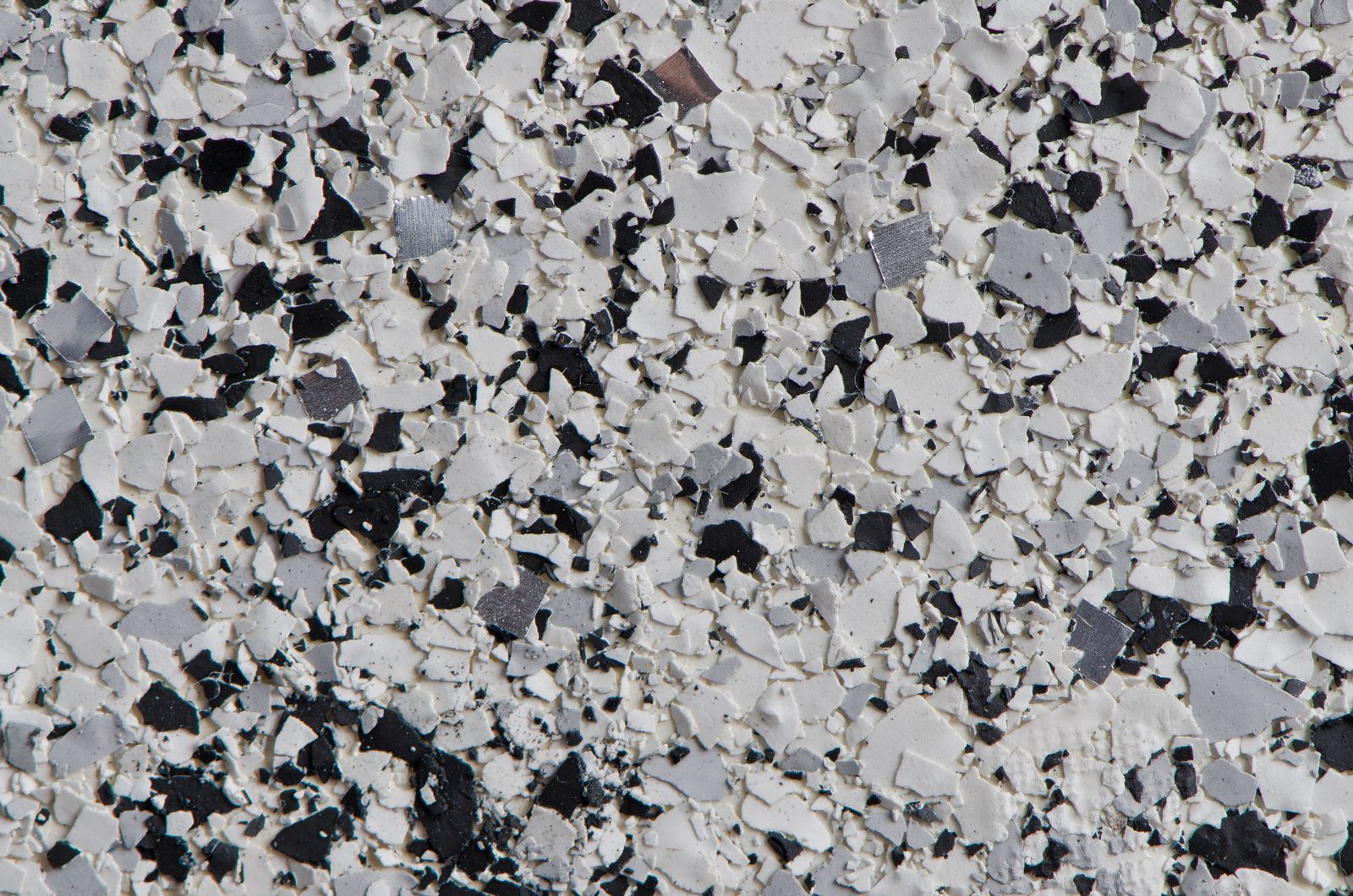
- Basecoat and broadcast: a pigmented polyurea or polyaspartic base is applied, and flake is broadcast to full coverage.
- Scrape and clean: once set, excess flake is scraped and vacuumed.
- Topcoat: a clear polyaspartic topcoat seals the floor and sets the final texture and sheen.
- Walkthrough: we review cure times and care instructions before we leave.
Choosing finishes
Polyaspartic systems can be finished with decorative flake, quartz, solid color or simply as a clear sealer over ground concrete. They are available in gloss and satin sheens, and we can add anti-slip aggregate to the topcoat in wet or sloped areas. Ask about thicker topcoat options for heavy commercial traffic or garages that see frequent workshop use.
How long does a polyaspartic floor last?
Longevity depends far more on preparation and use than on the label on the bucket. A polyaspartic garage system installed over a properly ground, repaired and moisture-checked slab is built to last for many years of normal residential use, and the UV stability means it will keep looking good for that whole time instead of slowly yellowing. Commercial floors that see forklifts, carts and heavy chemical exposure benefit from thicker topcoats and an occasional maintenance recoat, which renews the wear layer without disturbing the system underneath. We explain the expected service life and warranty coverage for your specific project in writing.
Clear polyaspartic sealers for bare concrete
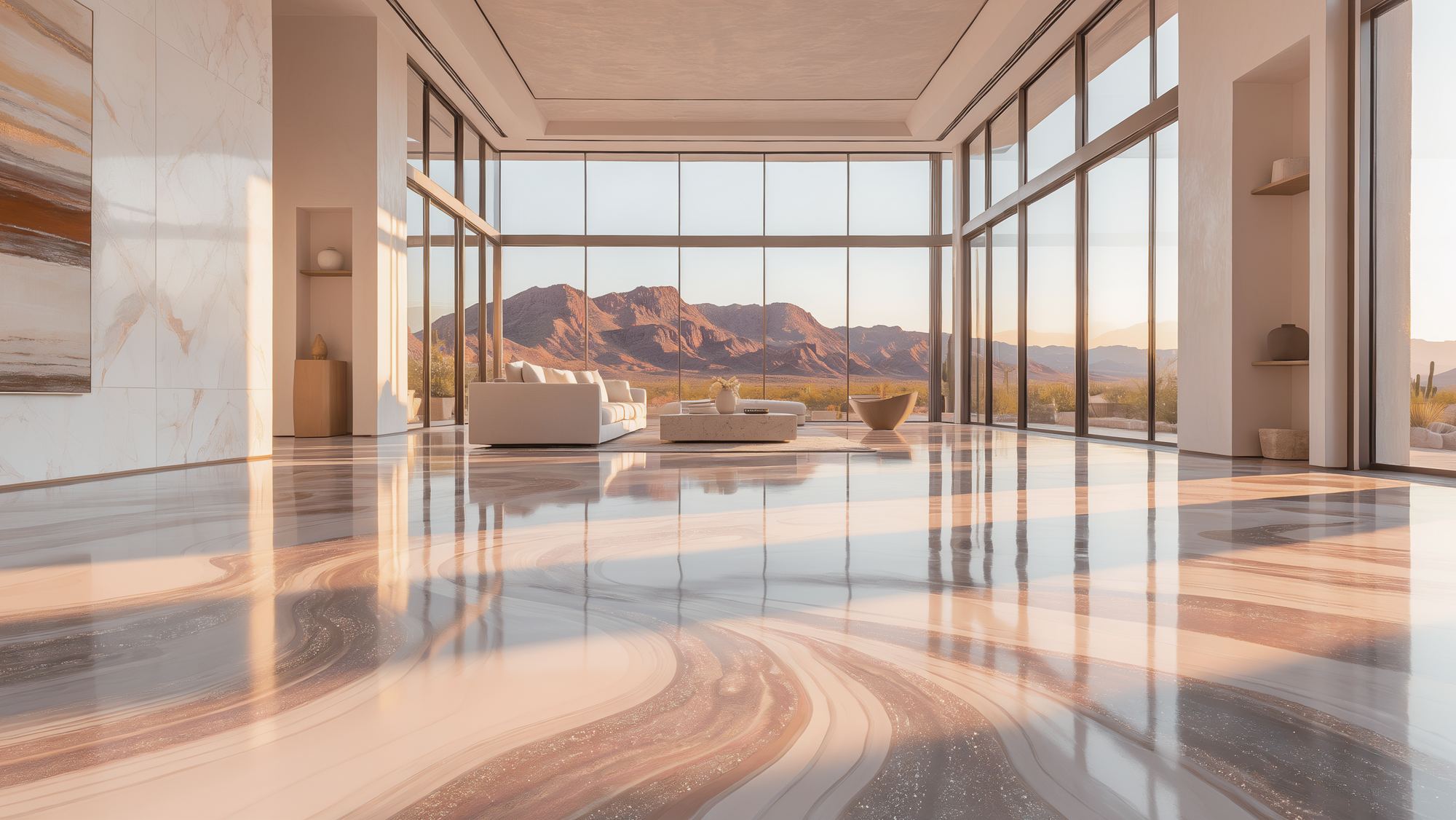
Not every client wants color or flake. Some love the natural look of their concrete and simply want it protected. A ground-and-sealed floor finished with clear polyaspartic delivers exactly that: the slab's own character, deepened in tone, sealed against oil and stains, and protected from dusting. It is a popular choice for modern homes, breweries, studios and retail spaces with an industrial aesthetic. Because the sealer is UV-stable, it will not yellow near windows or roll-up doors.
Polyaspartic in Mesa's climate
Mesa's long, intense summers, strong UV and dramatic temperature swings are exactly the conditions polyaspartic was designed for. Garages that face west, homes with frequent door-open time, and outdoor living areas all benefit from its heat and UV resistance. We have refined our scheduling and mixing practices for summer installations so you get a consistent, professional finish even when the slab is warm.
Schedule a free polyaspartic estimate
If you want a durable, great-looking floor without giving up your garage or shop for a week, a polyaspartic system is worth considering. We offer free on-site estimates throughout Mesa, Gilbert, Chandler, Tempe, Queen Creek, San Tan Valley and Apache Junction. We will inspect your slab, recommend a system and provide a clear written proposal with schedule and cure times.